
Ten Years Without a Cigarette
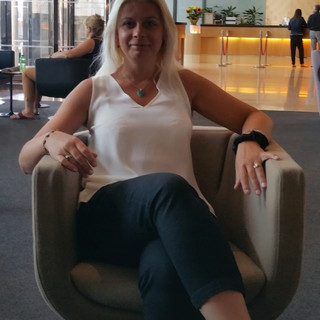
by Agnieszka Wolsoncroft

I want to tell you something I almost didn't write about.
For a long time I didn't think it was the kind of story people needed to hear from me. I have written about gratitude and adoption and leaving one life for another. I have written about grief and joy and the long blue sky over Perth. Cigarettes didn't seem to fit the picture I was painting.
But then I remembered something from the first newsletter I ever sent: hiding your story hides the medicine someone else might be desperately waiting for.
So here it is.
Today — the 18th of October 2026 — marks exactly ten years since I smoked my last cigarette. For those who knew me from my London days, the fact that I actually stopped and never went back is, I suspect, something close to a miracle. I know, because there were years when I believed it was impossible for me too.
And if you have never had a problem with cigarettes — this might not be your story. But perhaps you know the feeling. Perhaps there is something else in your life, something that has been eating at you quietly, something you haven't quite worked out how to put down. I don't have a solution for every habit that holds us. But I know this much: if you think it is impossible to stop smoking, it isn't. It is only impossible until it's done.
And today that impossible has a different name; it is now called 'Ten years smoke free'.
*
The story begins at sea.
My first job on a cruise ship was as a bar waitress. Long hours, hard work, a floor to clean at the end of every shift while your feet were already done. And here is the thing about a bar waitress who doesn't smoke: the ones who did were allowed to disappear two or three times a shift — step outside, come back whenever. The ones who didn't stayed on the floor, working, cleaning. We shared the same tips at the end of the night, those who had taken their breaks and those who hadn't.
I held out for about two weeks.
Then I decided: if everyone else gets a break, so do I.
A couple of people warned me. Don't start, they said, you won't be able to stop. I laughed them off the way you laugh off things you are absolutely certain will never apply to you. I'll smoke on the ship, I told them, and I'll stop when I'm home.
I bought my first carton of duty-free cigarettes — very cheap, very many — and that was how it started.
To my dismay, stopping when I was home turned out to be considerably harder than I had imagined. The contract ended. The ship sailed on without me. The cigarettes stayed.
And so it went, for quite a few long years.
*
The time in London — the last couple of months right before our move to Perth — was the worst of it, emotionally. I wanted to stop. I wanted it badly. But my mind was full of the move, the uncertainty, the question of whether I would ever really fit into a new country, a new life. I kept thinking: after the move, I'll deal with it. When things settle. When I feel more like myself.
I didn't stop then. But I found something else in those London years that helped more than I knew at the time: meditation. That, I think, is a story for another Sunday.
What I will say is this: when we finally left, when the plane lifted off and England disappeared beneath the clouds, I was carrying two things I had not intended to bring with me. One was fear — the ordinary kind, the kind that travels with any leap into the unknown. The other was seventeen years of cigarettes.
*
The real story really begins in Bali.
David and I were there on holiday — a pause between one life and the next. We had left London. We were on our way to Perth, to the new chapter, to the version of us that would exist in a bigger sky and more space than we'd known in years. Bali was the breath in between.
I smoked in Bali the way you smoke when cigarettes are cheap and the air is warm and you are telling yourself you'll deal with it later. Two packs a day at the peak of it. And somewhere underneath all the trying and the failing that had come before, I had come to believe — really believe, in the way you believe things about yourself that nobody says out loud — that this was simply who I was. A smoker. Someone for whom this particular cage was permanent.
Our last evening in Bali, sitting in the smoking area of Denpasar airport, I looked at the cigarette in my hand and felt the weight of seventeen years behind it. A new country was waiting. A new life. And something in me — something quieter than logic and more stubborn than habit — said: not this. Not this too.
I started to cry.
I said it to David through tears: I'm quitting when we get back. Completely. Forever. And I was scared, because I had tried before and failed, and I didn't know if I believed my own words.
He looked at me for a moment. Then he said: we'll just make a deal. We shake on it. You can do this. I'll quit too. It’s time.
We shook hands on it, there in the airport. And I looked at that handshake — his steady hand, my tear-streaked face — and felt something shift. Terrified still, but no longer alone in it.
*
I smoked the cigarettes I had left when we arrived. The last one was on the 18th of October 2016. And then I stopped.
Cold turkey. No patches, no substitutes, no gradual reduction. Just — no more money spent on cigarettes ever again. That was the promise I made to myself, and the way I framed it mattered: not 'I can never smoke again,' which felt like deprivation, but 'I will never waste money on cigarettes again,' which felt like a choice I was making for myself.
The first weeks were hard. We had just arrived in Perth, living out of suitcases, navigating a new city, learning to drive on the left — and underneath all of that, the cravings. They came in waves, unexpected and insistent. I talked myself through them the way you talk a child through a bad dream: this will pass, this will pass, this will pass.
And it did. It always did.
*
I am writing this today, ten years to the day, because I know someone reading it right now believes what I believed: that they cannot. That the hold is too strong, the habit too old, the failure count too high for one more attempt to be worth making.
I believed all of that. And I was wrong.
It is only impossible until it's done.
Ten years is a long time. Long enough to have forgotten what it felt like to need one, most of the time. Long enough to have stood in a new country, built a new life, watched a garden grow, raised a daughter — all of it smoke-free, all of it cleaner and clearer and more fully mine than it would have been otherwise.
I don't miss it. Genuinely. And I would never have believed you if you'd told me that ten years ago in Denpasar airport, cigarette in hand, terrified of a handshake.
This post is both a celebration and an offering. Ten years smoke-free is worth celebrating. But more than that, it is worth sharing — because if reading this reaches even one person who is sitting somewhere right now, wondering whether it is possible for them — I want them to know: it is. I know, because I once thought it wasn't.
For this blog, I chose the photo of Anya on the swing because it represents freedom and joy. And this is exactly what ten years without a cigarette means to me: freedom and joy. And for that I am grateful.
*
A Moment of TAG
The TAG Method — Thanksgiving, Appreciation, Gratitude — is my way of moving through life with intention. Here is how it meets a story like this one:
Thanksgiving — Take Action
If there is something you have been carrying that you have told yourself is impossible to put down — think about what one small promise to yourself might look like. Not forever and not the whole mountain. Just today's version of the handshake. Write it down somewhere and make it real by naming it.
Appreciation — Build Awareness
Notice, this week, the things in your life that exist because of a hard decision you once made. The friendships, the health, the mornings, the clarity. Appreciation is looking at what your courage already made possible, and letting yourself see it clearly.
Gratitude — Feel It
Think of someone who walked alongside you through something difficult — who said 'I'll do it too' when you needed to hear it most. Let yourself feel grateful for that. The people who show up for us in the hardest moments are among the greatest gifts of a life.
With love and gratitude,
Agnieszka
If you are on Substack, come and find me there next Sunday. The word we will be sitting with is Possibility — and after a week like this one, I can't think of a better word to carry forward.
In two weeks, come back and find me here. I'll be writing about what seven years of writing letters to strangers taught me about human nature — and about us. I think it might stay with you.
To read more of my posts, go back to BLOG | Agnieszka W.


Comments