
You Never Know The Difference You Make
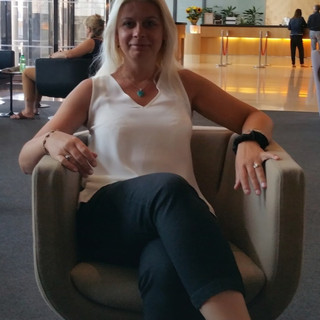
by Agnieszka Wolsoncroft

*
Last Sunday, Anya and I stood at the edge of Burns Beach, toes in the wet sand, watching waves roll in from the Indian Ocean. The morning was cool – Perth winter settling in – but the sun was warm on our faces.
She pointed at the horizon, squinting against the light.
"What's there, Mummy?"
I crouched down beside her, following her gaze across the endless blue.
"The whole world," I told her. "Indonesia first. Then further – India, Africa, Europe. Poland, where I was born and we went to see earlier this year. England, where I lived before you. All the countries I've already seen when working on cruise ships, and so many more I haven't. One day, I'll show you all of it."
She was quiet for a moment, taking that in. Seven years old, trying to picture countries she's only heard about in stories.
"The whole world?" she asked again, like she needed to be sure.
"The whole world."
*
That question – What's there, Mummy? – took me straight back forty years. I don't recall much from my childhood, unfortunately. Only glimpses of random occasions, single sentences out of context, sometimes a face and a fragment of a conversation. I wish it could be more.
But I do remember one sunny afternoon in the summer of 1984, when my parents took us to the seaside for the first time.
We rented a little cottage in the middle of a pine forest in the Słowiński National Park, just by the sand dunes. The holiday town, Rowy, was about an hour ride by bus from our new home town, Słupsk. We used to live in the Pomeranian lakeside, and when Mum was pregnant with my brother, we moved to the seaside to build a bigger house for a growing family.
I was six at the time. My little brother was about one year old.
After unpacking our holiday gear for two weeks, we set off for a walk to the sea. It seemed like a long walk for my little legs from our cottage to the beach, and I didn't know what to expect. I was curious. I was fascinated by the many pine cones everywhere. I was gazing at the crowns of the trees swaying in the wind, wondering how many more pine cones could drop down.
We came out of the forest straight to the beach.
And there it was.
I held onto one of the pines and couldn't move. My eyes widened. I stood breathless for a moment, and when the first shock vanished, I started running to the shore as fast as I could with the biggest smile on my face. I never knew my arms and legs could move with such vigour.
I stopped right at the seashore and stood on the wet sand by the sea, too confused and excited to get into the water.
I tried catching the waves with my feet, stepping on them one foot at a time, and I kept staring at the overwhelmingly huge waters of the Baltic Sea in front of me. I was mesmerised. I was in love. My eyes and my heart were filled with awe. I was astonished at how big the sea was.
When we swam or went fishing in the lake, I always saw the other side. I knew where the water started and where it finished. I knew the beginning and the end.
The sea was a completely different story.
I pointed at the horizon and asked my mum: "What's there, Mama?"
"It's Sweden."
I looked at her puzzled, and she repeated: "On the other side of the sea is Sweden."
"Where is the other side? I can't see it! Why can't I see it? What is Sweden?" I wanted to know.
"Sweden is a country that lies on the other side of the Baltic Sea," my mum explained.
"Why can't I see it? I want to see it!"
My mum said that we couldn't see the other side because the sea was too big, but if we came back here on a day with a clear blue sky and looked intensely, we might be able to see it.
I looked up at her again and frowned. That was some sort of explanation, alright, but I still couldn't see Sweden! This wasn't enough for me. I wanted to know more. And what else is there, besides Sweden? I was burning to find out.
One thing I knew, and it stayed clear to me forever: the sea was absolutely amazing.
I turned around and saw my brother running around in circles on the beach and playing with the sand, happily stumbling and falling over on the soft surface with contagious laughter. His curly blond hair and chubby cheeks made him look like a little angel, and he was always close to Mum.
Needless to say, I spent all my days on the beach during those holidays, playing in the sea, catching waves and discovering seashells and sunsets. On my way back to the cottage, I would collect pine cones. When Mum said we were not taking them back home, I couldn't believe it. I was devastated. I had to act quickly.
I waited till everyone fell asleep, hid the collection of pine cones at the bottom of my bag under my clothes, and sure enough, I smuggled them all to my room in Słupsk.
I wasn't tempted by the many attractions at the funfair like all the other children my age at the time. The sea was all I needed. I reluctantly left the beach only when Mum said we were going to the town to have fish and chips or an ice cream. My brother was enslaved to waffles with whipped cream and blueberries. Strawberries and sultanas were good, too. He continued in this state for many years after those holidays.
As I said, I don't remember too many things from my childhood. But during that summer day when I saw the Baltic Sea for the first time in my life, I promised myself I would see the world. Not only Sweden from this side of the sea on a clear blue sky day, but the whole world.
I called it: my dream.
I was determined from this day on to do it. I didn't know then what it meant or how I was going to do it, but I was certain that what I wanted to do in my life was to see the world.
I had no doubt it was going to happen.
And it did.
Years later, I'd work on cruise ships. Cross oceans. Stand on beaches in countries I couldn't pronounce at age six. Immigrate to Australia – literally as far from Poland as geography allows.
All because someone once took a six-year-old girl to the Baltic Sea and let her ask questions. Let her wonder. Let her dream about what was on the other side.
Did they know what they were doing? Did they realise that one afternoon in Rowy would shape my entire life's trajectory?
Probably not.
They just thought they were taking the children to the beach. Maybe getting some fresh air. Maybe giving us a proper Polish summer holiday.
But that day planted seeds I'm still harvesting forty years later.

*
"You never really know the true impact you have on those around you. You never know how much someone needed that smile you gave them. You never know how much your kindness turned someone's entire life around. You never know how much someone needed that long hug or deep talk. So don't wait to be kind. Don't wait for someone else to be kind first. Don't wait for better circumstances or for someone to change. Just be kind, because you never know how much someone needs it." – Nikki Banas
On Friday, when Anya came home from school, she told me about a girl in her class who always sits alone at lunch.
"I sat with her today, Mummy," she said, matter-of-fact, already moving toward the kitchen for her after-school snack.
"That was kind of you," I told her.
She shrugged, opening the fridge. "And now she is best friends with me and Charlotte, you know?"
Just like that. As if making someone's entire week – maybe their entire year – better was the most ordinary thing in the world.
She had no idea she'd just changed someone's life. She was just being kind.

*
I've been thinking about the word "impact" lately.
The dictionary tells me it means the effect or influence of one person, thing, or action on another. But that definition feels too small. Too clinical. Like trying to capture the ocean in a teacup.
Because impact isn't just influence. It's the Robin Sharma sentence I heard years ago during one of my darkest seasons: "Forgiveness doesn't make them right, it makes you free."
Ten words. That's all. But those ten words shifted my entire world.
I'd been carrying resentment like a heavy winter coat I couldn't take off. Believing that forgiving people who'd hurt me meant they'd won somehow. That letting go of anger meant accepting what they did was okay.
But that single sentence – heard in a podcast I almost didn't listen to, on a morning I almost didn't go for a walk – revealed the truth.
Forgiveness wasn't about them at all.
It was about my freedom.
*
Last month at our "Write a Letter, Send a Smile" gathering, I mentioned we needed more letters.
It wasn't a dramatic announcement. Just a simple truth shared over tea and biscuits. There are so many lonely people – cancer patients waiting for treatment, aged care residents who haven't had a visitor in months – and our small group of volunteers was doing beautiful work, but I kept thinking about all the people we weren't reaching yet.
One of our volunteers is a ten-year-old girl named Scarlett.
Bright. Thoughtful. The kind of child who actually listens when adults talk instead of just waiting for her turn to speak.
I didn't know this at the time, but the next day, Scarlett went to school and told her teacher about our initiative. She explained that people in hospitals and nursing homes feel forgotten. That sometimes a letter is the only thing they receive all week. That maybe – just maybe – the class could help.
Her teacher said yes.
Now, once a month, an entire classroom of children writes letters for "Write a Letter, Send a Smile." Twenty-five more voices telling lonely people they matter. Twenty-five more reminders that someone cares. Twenty-five more moments of connection reaching people who desperately need to know they're not forgotten.
I didn't ask Scarlett to do this.
I just mentioned we needed more letters.
She heard that need – and she acted.
A ten-year-old child mobilised her entire class because one sentence I spoke landed in her heart as a call to action.
Here's what I've learned about genius: it doesn't always look like what we expect.
Sometimes it's a child's wild imagination. Sometimes it's a friend's creative spark. Sometimes it's someone's unconventional idea that makes everyone else in the room uncomfortable.
And when you're privileged enough to be in the company of genius – however it shows up – you have a choice.
You can damage it. Dismiss it. Diminish it with practicality or cynicism or "that's not how things work."
Or you can encourage it. Water it. Make space for it to grow.
Scarlett's teacher could have said, "That's nice, dear, but we don't have time for extra projects."
Instead, she said yes.
And something magical happened.
Not just for the lonely people receiving letters. Not just for Scarlett, learning that her voice matters and her actions create change.
But for her entire classroom. Twenty-five children learning that their words matter. That they can make a difference. That kindness is something you DO, not just something you feel.
That teacher's "yes" impacted Scarlett. Scarlett's action impacted her classmates. Those classmates' letters impact lonely strangers. Those strangers' lifted spirits impact the nurses and caregivers around them.
One sentence I spoke. One child who listened. One teacher who said yes.
Dozens of lives touched. Hundreds more to come.
That's how impact works. It multiplies in directions you never predicted.
One afternoon, I read a Chinese proverb that redirected my entire life's purpose:
"If you want happiness for an hour – take a nap.
If you want happiness for a day – go fishing.
If you want happiness for a year – inherit a fortune.
If you want happiness for a lifetime – help someone else."
I want to be happy for a lifetime and beyond.
So I choose to help. Every single day. I think I chose service because it makes me feel most alive. Because purpose seems to find me there.
That proverb gave me permission to build my life around service rather than achievement.
And everything changed.
Now I'm sharing it with you. And maybe you'll share it with someone else who needs to hear it. And maybe they'll share it with someone who's building a life and doesn't yet know what to build it around.
That's the ripple we create without even knowing.
The truth is, most of your impact happens in spaces you'll never witness.
The colleague who watched how you handled that toxic situation with grace – and decided to try grace themselves next time instead of reacting with anger.
The stranger who saw you hold the door despite being in a rush – and remembered there's still kindness in the world during a week when they'd forgotten.
The friend who heard you say one honest thing about your struggles – and realised they weren't alone in theirs.
The child who watched you practice gratitude daily – and learned that joy is a choice you make, not a circumstance you wait for.
You'll never know about most of these moments.
You'll never receive the thank-you note or the acknowledgment or the credit.
But the impact is real. The ripples are spreading. The seeds you're planting are growing in gardens you'll never see.
And that's okay. Actually, it's more than okay. It's beautiful.
Because impact isn't about recognition. It's about showing up. Being kind. Sharing what helped you. Encouraging the genius you see in others. Saying yes when you could say no. Speaking the sentence that someone somewhere desperately needs to hear.
*
Thanksgiving. Appreciation. Gratitude.
This is what the TAG Method teaches about impact:
Thanksgiving (Action): I've learned that impact often begins in ordinary moments. Showing up. Being kind. Speaking truth. Sharing something that helped us. Taking someone to the sea. Saying yes to the child with the big idea. Writing the letter. Giving the hug. Offering the sentence that might change someone's world.
Most of the time, we never know what happens next. We don’t get to see every ripple. But perhaps that isn’t the point. Perhaps the point is simply becoming the kind of person who shows up with open hands and an open heart.
Appreciation (Awareness): Sometimes I think we move through life so quickly that we forget to pause and notice who showed us the sea. The people who spoke the sentence that freed us. The teacher who said yes. The friend who believed in us before we believed in ourselves.
When you appreciate impact received, you become more intentional about impact given. You start to see how small moments matter. How one sentence can change everything. How showing up – just showing up – is often enough.
Gratitude (Feeling): There is something deeply humbling about realising we get to participate in each other's stories. That our words, kindness and presence may matter more than we ever know.
For being given sentences that might help someone. For knowing wisdom worth passing on. For being trusted with children's imaginations and strangers' hopes and friends' vulnerable moments.
When you practice all three together – showing up with kindness, noticing impact received, feeling grateful for the privilege of making a difference – you become someone who changes lives without even trying.
Not because you're special or extraordinary.
But because you're paying attention. You're being kind. You're showing up.
And that's enough. So here's what I know.
You're making more difference than you realise.
The sentence you spoke that someone needed to hear. The example you set that someone's following. The kindness you showed that someone's remembering. The door you held. The smile you gave. The letter you wrote. The truth you shared. The yes you said when you could have said no.
It's all rippling outward in ways you'll never fully know. Perhaps the world changes less through grand gestures and more through ordinary people showing up, day after day, with kindness.
And you never know – your one sentence, your one gesture, your one yes might be the thing that changes their entire world.
Just like someone once changed yours. Just like we're changing Anya's now.
And just like Anya – seven years old, making best friends out of lonely classmates like it's the most ordinary thing in the world – is already changing others.
With love and gratitude,
Agnieszka
*
If you've ever wondered whether your life makes a difference – whether anyone notices your kindness, remembers your words, or carries forward what you've taught them – you're not alone. Most of us walk through life dropping seeds we never see grow, touching lives we'll never know about, making impact that ripples far beyond what we can measure. The TAG Method teaches us to show up anyway (Thanksgiving), notice the impact we receive (Appreciation), and feel grateful for the privilege of making a difference (Gratitude). Because what you focus on expands – and when you focus on being someone who shows up with kindness, your impact multiplies in directions you never imagined.
Come back in two weeks. I'll be here with a story about childhood – the one we lived, the one we deserved, and the one it's never too late to give ourselves. About healing the child you were by becoming the adult you needed. About discovering that growing up doesn't mean giving up wonder, play, or permission to start again.
If this reflection met you where you are today, I invite you to continue the journey with the 7-Day TAG Gratitude Reset (click on the link below) – a gentle practice of Thanksgiving, Appreciation, and Gratitude for ordinary days, difficult seasons, and everything in between.
You can read my previous post here:


Comments