
We All Cross Oceans
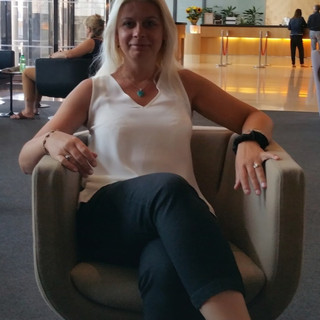
by Agnieszka Wolsoncroft
Good Friday evening. The house is quiet.
Not the natural quiet of a sleeping child or an empty room. This is different. Deliberate. Sacred. Jesus has just died on the cross.
In Poland, when I was young, Good Friday evening meant silence for those who truly believed it. Not everyone kept it – most people didn't. But for those of us who felt we'd lost a friend, who understood what this day meant, the silence was everything. The church bells didn't ring – they wouldn't ring anywhere in the world until Saturday evening's Easter Vigil.
In London, fourteen years of my life, I kept this tradition. Even in a city of millions, in my flat in Ealing, I could create silence. Just me and the eggs and the remembering.
Here in Perth, it's different.
Anya is seven. She doesn't understand silence yet – not the way I learned it. She chatters while I arrange the glasses. She asks why we're dyeing eggs on Friday instead of Saturday. She wants to know if the Easter Bunny is real.
The silence isn't external anymore. It's internal.
I keep it inside – this awareness of what this day means, what this hour means – while I measure boiling water into glasses arranged in a perfect row. While I add the dye, all different colours. While I carefully slide each hard-boiled egg into its bath of colour.
Whether you believe Jesus is the Son of God or not, what happened on this day two thousand years ago matters. The Romans designed crucifixion to be the most brutal execution method they could devise. Nails driven through wrists and feet – not hands, wrists, where they could bear the body's weight. Hours hanging there, suffocating slowly, pushing up on shattered feet just to draw breath. The mockery, the public humiliation, the absolute agony designed to terrorize anyone who witnessed it. An innocent man endured that. For hours. Until his body could bear no more.
This is why I keep the silence. This is my Good Friday.
Not the absence of sound. But the presence of remembering.
#
Saturday morning. The drive to the markets. Anya bounces in her car seat, chattering about the blessing later, about her purple basket, about whether the little chocolate chick will be awake or sleeping when we get home.
"Mummy, why isn't the music on?"
I glance at her in the rearview mirror. She's so used to our drives with music – Polish songs, English songs, whatever makes the journey feel shorter.
"Because we're still remembering yesterday," I say quietly. "The quiet helps us remember."
She considers this. Nods. Goes back to watching Perth suburbs slide past the window.
I keep my silence, the internal silence. My choice to remember.
At the markets, Anya tugs my hand. "Can we get flowers, Mummy? For the baskets?"
In Poland, it would be daffodils. Bright yellow, trumpet-shaped, the first sign that winter is finally, truly over. In London too – those fourteen years in Ealing, daffodils everywhere in March and April. They lined the parks and streets, filled the markets, announced spring with absolute certainty. I loved them.
But this is Perth. This is Australia. This is autumn, not spring. The daffodils here are confused – they don't know when to bloom in this upside-down world where Easter falls in autumn instead of spring.
So we buy gerberas instead. Bright and bold and completely Australian. Orange and pink and yellow – not the delicate pale yellow of daffodils, but vibrant, unapologetic colour.
"These ones!" Anya points to the brightest bunch.
And I think: This is what making home in a new world looks like.
Daffodils for Poland and London. Gerberas for Perth. Both beautiful. Both right. Both holy.
#
Back home, I spread everything across the kitchen counter.
The eggs, now dry and shining – brilliant red, deep blue, sunny yellow, spring green. The onion-skin eggs too, the ones we boiled for forty minutes yesterday until they turned that perfect deep brown. Little babkas cooling on a rack, waiting for their dusting of icing sugar.
Anya had loved making those babkas – each one in its own little silicone shell, her small hands carefully spooning batter, her face serious with concentration. "They're like tiny cakes for tiny people!" she'd announced, delighted.
Now they sit ready, perfect little golden domes waiting to go into the baskets.
Polish sausage from the shop thirty minutes away – the only place in Perth where I can find proper Polish food. I make the trip twice a year. Christmas and Easter. It's worth it.
Anya appears at my elbow, eyes wide. "Is it time? Can we make the baskets now?"
"Almost. We need to wait for Gail."
Our neighbour arrives, ready to help us arrange the baskets like she did last year. She'd loved it so much – learning about święconka, the tradition of blessing food on Holy Saturday, of sharing it on Easter morning – that she asked to do it again this year.
"I look forward to this now," she says, settling at the counter beside us. "It's become part of my Easter too."
Polish tradition shared with an Australian neighbour and friend.
"It's very Polish," I tell her, arranging white cloth in the bottom of my basket. "In Ukraine and a couple of Slavic countries as well – they all have their versions. Different foods, same heart. Blessing what we have. Sharing what's been blessed."
Anya is arranging her basket with intense concentration. Purple basket. Purple ribbon with white unicorns. Chocolate eggs nestled in green paper grass. A tiny yellow chick. She insisted on her own basket this year.
"Last year," I explain to Gail, "Anya didn't understand English well enough yet. The blessing, the tradition – it was all too new, too confusing. But this year? This year she understands everything."
Anya looks up, beaming. "This year I know what all the words mean!"
I watch her small hands placing eggs so carefully. Adding a tiny babka – one of the ones she helped make. Making everything perfect in her seven-year-old way.
This is her second święconka in Australia. But it's her first one that truly belongs to her.

My mother used to prepare eggs the same way I do now.
I can see her so clearly – standing at the kitchen counter in Poland, arranging glasses in a perfect row. Boiling the kettle. Pouring water carefully into each glass. Adding the dye – red, blue, yellow, green – and that splash of vinegar to keep the colours sharp and firm.
I do exactly the same thing.
The same row of glasses. The same careful pour. The same colours, same vinegar, same patience as I slide each egg into its bath and wait.
It's funny how traditions travel. Not in suitcases. Not in boxes. But in muscle memory, in the way your hands know what to do before your mind remembers learning it.
Mum never sat me down and taught me this explicitly. I just watched. Year after year. Easter after Easter. Until my hands learned what hers knew.
And now Anya watches me.
In fourteen years, in London, I had a Polish parish in Ealing. A beautiful church where I could take my święconka basket every Holy Saturday. I was blessed to have that – a piece of Poland in the middle of England, a place where everyone understood what this meant.
Here in Perth? Different.
St. Anthony's has one blessing. Not every half hour like Poland, where priests would bless basket after basket, wave after wave of families bringing their food to be sanctified. Here, we gather at eleven on Saturday morning. All of us. Once.
But our priest understands. He's from the Philippines – he knows about traditions crossing oceans, about making home in a new world while keeping the old world close. He blesses our baskets with the same reverence as if we were in Gdansk or Manila or anywhere else where people remember.
I am grateful for this. Deeply grateful. Not everyone has it.
#
There's a Polish poem I've always loved. Adam Asnyk wrote it, and even in English translation, it speaks truth:
"But do not trample the altars of the past,Though you yourselves are meant to raise more perfect ones;Upon them, a holy fire is still glowing,And human love stands guard there,And you owe them reverence!"*
Do not trample the altars of the past.
Yes, the world changes. Yes, we build new things, better things. Yes, we blend traditions and create something that didn't exist before – Polish święconka in Australian autumn, gerberas instead of daffodils, a Filipino priest blessing food in Perth.
But the altar of the past? The holy fire still glowing there? The human love that stands guard?
We owe them reverence.
This is why I dye eggs in silence on Good Friday. Why I drive thirty minutes twice a year for Polish sausage. Why I teach Anya to arrange baskets even though no one else in her school does this, even though she might be the only seven-year-old in Perth with a purple święconka basket.
Because upon these altars, a holy fire is still glowing.
And human love – my mother's love, her mother's love before her, all the way back through generations of Polish women dyeing eggs and baking babkas and keeping silence on Good Friday – that love stands guard.
I owe them reverence. So I keep the traditions. Imperfectly. Incompletely. But with love.
And I pass them to Anya. Who will pass them to her children someday. Who will probably add new traditions I can't even imagine yet – just like we added the Australian gerberas, just like David will add the English egg hunt tomorrow morning.
That's how traditions cross oceans. Not by staying frozen in time.
But by being carried forward with love, adapted with respect, honoured even as they change.
#
Sunday morning. Easter.
I wake early – before Anya, before David, before the sun is fully up. This is my quiet time. The house still holding Saturday's peace.
The kitchen smells like coffee and babka and possibility.
I spread white cloth on the dining table. Arrange the blessed food from yesterday – eggs, sausage, bread, babka. More eggs, more bread, more everything. Because the essence of święconka is this: the little that you have, you share with others. And when you share, somehow there's always more.
Through the dining room's floor-to-ceiling windows, I can see David already outside, hiding chocolate eggs in the garden. He's been preparing Anya's first real egg hunt.
Last year, she didn't quite understand the concept – her English was still emerging, the whole tradition felt foreign. We gave her chocolate eggs and she was delighted, but the hunt itself was too confusing. This year, she understands everything.
I hear her footsteps racing down the hallway. She bursts into the dining room in her unicorn dress and bunny ears—an outfit she picked out herself weeks ago, planning for this exact moment.
"Is it time? Can I start?"
"Go ask Daddy!" I laugh.
She races outside, and through the windows I watch her squealing every time she finds an egg – behind a pot plant, tucked under the outdoor chair, hidden in the branches of the lemon tree.
This is what Easter is. New life. Resurrection. The stone rolled away from the tomb.
"May your faith be renewed," someone wrote to me yesterday, "as you celebrate the miracle of Easter and the beauty of new beginnings."
I light a candle on the table. Polish tradition and English tradition, both here, both blessed, both ours.
Anya bursts back through the door, basket overflowing with chocolate eggs. David follows, grinning.
"Did you find them all?"
"Every single one!" She sets her basket on the table next to mine. Purple and chocolate next to white cloth and blessed babka. English tradition next to Polish tradition. Easter in Australia – autumn, not spring, but still Easter. Still resurrection. Still new beginnings.
We sit together. Share the food.
The tradition of dyeing eggs, bringing baskets to church, sharing food – it matters because we choose to make it matter. Because we show up on Good Friday evening and dye them in silence even when silence is hard.
Because we notice the way the colours bloom in the glass, the way our hands do what our mothers' hands did, the way Anya watches and learns.
Because we feel it – that connection across time and space, that gratitude for what was given to us, that responsibility to give it forward.
Thanksgiving. Appreciation. Gratitude. Action, Awareness. Feeling.
#
Later, dishes washed, Anya playing outside in her unicorn dress, I stand in the dining room looking at my two baskets on the table. Mine with just the white cloth left inside, the blessed food shared and eaten. Hers, purple and empty now too, the chocolate eggs discovered and devoured. Both ready to be tucked away for next year. Traditions don't cross oceans by themselves. We carry them. Imperfectly, yes. Adapted, yes. Changed by new worlds and new languages and autumn instead of spring. But carried.
With reverence for the altars of the past. With love for the children who will carry them next.
With gratitude for the silence that teaches us to remember, for the hands that taught our hands, for the holy fire that still glows upon altars built by people we'll never meet, in countries some of us will never see again.
Easter is about resurrection. About new life. About stones rolled away from tombs.
But here's what Easter teaches us: to get to resurrection, you have to go through the cross first. There's no Sunday without Friday. No empty tomb without crucifixion. No new life without death. All those difficult things – leaving Poland young, endometriosis and miscarriage, London, four years waiting for Anya, learning new languages in new countries, carrying traditions no one else understands – they were not easy. But they led to this: Anya in her unicorn dress, finding chocolate eggs in an Australian garden, tasting blessed babka at our Perth table. When something difficult is happening – when you're crossing oceans you didn't choose to cross, when you're learning silence in the noise, when you're carrying traditions that feel too heavy – maybe you're in your Friday. If you're there right now – in the darkness, in the waiting, in the difficult middle – hold on. Something beautiful might be waiting on the other side.
But it's also about this: what we choose to carry forward. What we choose to remember. What we choose to give.
The Polish eggs and English egg hunts. The daffodils and gerberas.
The silence and the noise. The old world and the new.
All of it holy. All of it blessed. All of it ours to give forward.
This is how we make home in a new world.
Not by forgetting where we came from. But by carrying it with us. Respecting its altars. Honouring its fire.
And teaching our children – in purple baskets with unicorn ribbons, in unicorn dresses with bunny ears, in autumn gardens with chocolate eggs hidden in impossible places – that we all belong.
To the past and to the future. To Poland, to London and to Perth. To the whole wide world.
With love and gratitude,
Agnieszka
#
If you're carrying traditions across oceans – if you're dyeing eggs in autumn instead of spring, if you're explaining old-country customs to children who speak new-country languages – you're not alone. You're not losing anything. You're giving something forward. Imperfectly, beautifully, with reverence for what was and love for what's becoming. The altars of the past deserve our honour. The children of the future deserve our gifts. You're doing both.
Come back in two weeks. I'll be here with a story about courage, freedom, and the choice to remember. About understanding what it costs to have an Easter egg hunt in safety. What we choose to remember shapes who we become. A Polish – Australian gratitude for peace.
*The original Adam Asnyk poem:
Do młodych
Szukajcie prawdy jasnego płomienia,
Szukajcie nowych, nieodkrytych dróg!
Za każdym krokiem w tajniki stworzenia
Coraz się dusza ludzka rozprzestrzenia
I większym staje się Bóg!
Choć otrząśniecie kwiaty barwnych mitów,
Choć rozproszycie legendowy mrok,
Choć mgłę urojeń zedrzecie z błękitów —
Ludziom niebiańskich nie zbraknie zachwytów,
Lecz dalej sięgnie ich wzrok.
Każda epoka ma swe własne cele
I zapomina o wczorajszych snach:
Nieście więc wiedzy pochodnię na czele
I nowy udział bierzcie w wieków dziele —
Przyszłości podnoście gmach!
*Ale nie depczcie przeszłości ołtarzy,
Choć macie sami doskonalsze wznieść:
Na nich się jeszcze święty ogień żarzy,
I miłość ludzka stoi tam na straży,
I wy winniście im cześć!*
Ze światem, który w ciemność już zachodzi
Wraz z całą tęczą idealnych snów,
Prawdziwa mądrość niechaj was pogodzi:
I wasze gwiazdy, o zdobywcy młodzi,
W ciemnościach pogasną znów!


Comments