
When Freedom Has a Name
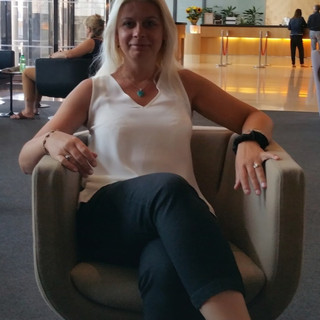
by Agnieszka Wolsoncroft

A couple of weeks ago was Easter. This Saturday is ANZAC Day.
Between them sits something I've been trying to understand my whole life: what it costs to dye an egg in safety.
Let me explain.
#
I was seven years old, sitting at my Babcia's kitchen table in Poland, watching her hands move carefully as she arranged brown onion skins in a pot of boiling water. She placed the eggs inside gently, one by one, the way you hold something precious.
"Why do we do this, Babcia?" I asked.
"Because we remember," she said. Not looking up. Just her hands, steady and sure, watching the water turn deep amber. "We remember what it cost to have this table. These eggs. This quiet morning where no one is coming through the door."
I didn't understand then. I was seven. I thought eggs were just eggs.
But my Babcia was born in 1935, my Dziadek in 1933. They were just a few years old when the world broke open in 1939. They were children – a bit younger than Anya is now – when they saw things no child should ever see.
They knew what it cost.
#
My grandparents never spoke much about the war. Any mention of it was visibly painful for them. Their faces would change. Their voices would drop. The stories would stop mid-sentence, as if the memories were too heavy to carry all the way to words.
Hunger. Cold. Being scared. Scenes no children should see.
I learnt early not to ask.
And I also learnt this: civilians pay a price that many of those in charge – those with the power to start and stop wars – have no idea about. The ones who make the decisions rarely see the children shivering in bombed-out buildings. Rarely know the taste of hunger that lasts for years. Rarely experience being forced from your home, your land, everything you know.
My grandparents were forced to leave their home and travel to the other side of Poland because of German – Soviet invasions. They lost their land. Their neighbours. Their entire world.
But they carried themselves forward anyway.
They had a family. They gave me fabulous adventures and memories during my childhood. They taught me to dye eggs in onion skins – the only dye they could afford during the war, the only colour that mattered when you were grateful just to have eggs at all.
That's courage. That's what freedom costs.
#
When I was a schoolgirl in Poland, every November 11th we would go to the cemetery. Independence Day in Poland. Remembrance Day in many other countries.
We were each told to bring a flower or a candle – we could choose.
I always chose a candle.
And I always deliberately went to seek a grave that said "unnamed soldier."
I would place my candle there, say a little prayer, and whisper thank you for fighting an unimaginable fight so we could now walk free.
Later in life – when I worked on cruise ships and saw countries and islands all over the world, when I lived in Poland, then London, and finally Perth, Australia – I kept this ritual. Whenever I am at any cemetery anywhere in the world, I'll always seek a cross or an unnamed grave to pay my respects.
Because someone needs to remember them.
Someone needs to say: you mattered. Your sacrifice wasn't wasted. We're still here because you stood in the gap.
Lest we forget.
#
A Couple Of Weeks Ago – I'm in Perth, Western Australia. It's Easter, and I'm teaching Anya how to dye eggs – the same way my Mama and my Babcia taught me.
We're sitting at our kitchen table. The autumn sun is warm through the window. I've arranged glasses in a perfect row – red dye, blue, yellow, green – each with boiling water and a splash of vinegar to keep the colours sharp and firm – my Mama’s teachings.
And beside them, a pot on the stove with brown onion skins boiling away, turning the water that perfect deep amber. The eggs inside will take forty minutes to become that beautiful brown that Babcia knew, that her mother knew, that stretches back through generations of Polish women who made beauty from whatever they had.
Anya's concentrating hard as she carefully slides a hard-boiled egg into the blue dye.
"Mama, why do we paint eggs?" she asks.
And suddenly I'm seven again, asking the same question.
But now I'm the one who has to answer.
#
Here's what I didn't say to Anya, because she's too young:
My grandmother lived through a war where dyeing eggs in onion skins was an act of resistance. Where having a table to sit at, onion skins to boil, eggs to dye meant you'd survived another week. Where the quiet morning was never guaranteed.
She lived in a country that disappeared off the map. Literally. Poland ceased to exist for 123 years, carved up by empires, erased from geography lessons, forbidden to speak its own language.
But Poland never stopped fighting for freedom. Never stopped carrying its traditions forward. Never stopped believing that one day, we would be proudly independent again.
And still – still – they dyed eggs in onion skins.
Because some things you don't let go of, even when they try to take everything else. Because traditions are how you remember who you are when the whole world says you don't exist. Because Poland carried itself up from non-existence through the sheer stubborn refusal to forget.
#
This Saturday Is ANZAC Day
I'm not Australian by birth. I came here as an adult, carrying my own history, my own wars, my own understanding of what freedom costs.
But I've learnt something living here, watching the dawn services, seeing the wreaths laid, hearing the Last Post echo across the morning:
Freedom always has a name.
It's not abstract. It's not a concept. It's not something you read about in textbooks and forget.
Freedom is the young soldier from Brisbane who didn't come home.
Freedom is the nurse from Melbourne who held the dying men's hands.
Freedom is the pilot from Sydney who flew into darkness knowing the odds.
Freedom is the soldier from Perth who left this beautiful city by the Indian Ocean and never saw it again.
Freedom is the Polish partisan who fought with nothing but a stolen rifle and a stubborn refusal to forget who they were.
Freedom is the Polish pilots who fought together with English pilots to defend Europe – men who'd already lost their country once and weren't about to let it happen to anyone else.
Freedom is my Babcia, teaching me to dye eggs in onion skins in a Poland that fought its way back to independence, saying quietly: We remember.
Freedom is my grandparents, who survived what no children should survive, and still chose to carry love forward.

I am forever grateful that I am free to move around – to move freely wherever I want.
I worked on cruise ships and saw countries and islands all over the world. I lived in Poland for about twenty years. London for fourteen. Now, for the last ten years, in Perth, Australia, where the Indian Ocean meets the sky and my daughter runs free on beaches her great-grandparents could never have imagined.
My daughter is a happy child who runs free.
Read that again.
My daughter runs free.
No soldiers at the door. No bombs in the night. No hunger that lasts for years. No being forced from her home because of invasions she didn't cause.
But here's what breaks my heart: at this very moment when I am grateful for freedom, when my daughter runs free in Perth – other children are living through war. Too many children. Too many wars.
Right now, somewhere in the world, a grandmother is teaching her granddaughter to make whatever they can with whatever they have, just like my Babcia taught me. But she's doing it under the sound of bombs. In a city under siege. In a country being erased.
Why?
So often, wars begin because someone wants what someone else has. Land. Resources. Power. The belief that having more will make us more.
But here's what I've learnt through practising gratitude for fifteen years:
When we're truly grateful for what we already have, we realise we don't need what belongs to someone else. Gratitude doesn't just fill us – it frees us. It eliminates the greed that drives so much suffering. It teaches us that enough is enough. That the eggs we can dye, the table we can gather around, the children who can run free – this is everything.
If more of us practised genuine gratitude – if more leaders, more nations, more people in positions of power understood that what they have is already enough – how many wars would never begin?
This is why we remember the ANZACs. This is why we stand at dawn services. This is why we say their names.
Because we can only truly honour their sacrifice by choosing peace. By choosing gratitude over greed. By understanding that freedom doesn't mean taking from others – it means protecting what makes us all human.
When I was a teenager in Poland, learning about the history of my country and so many others, there were posters everywhere: Nigdy więcej wojny – Never again war. What have we learnt from history? Where has the promise gone? To remember the ANZACs, my Polish soul shouts: NEVER AGAIN WAR. And I mean it.
#
Anya finishes her egg. She lifts it from the blue dye, delighted by the colour. The onion-skin eggs are still boiling, turning that perfect deep brown that carries my Babcia's hands in every shade.
"Can we make święconka baskets tomorrow?" she asks.
And I say: "Yes. Yes, we can."
We can dye eggs in safety – bright colours from the shop and deep brown from onion skins, both traditions honoured, both beautiful – because men and women we'll never meet decided our safety was worth their lives.
We can sit at this table in peace because someone, somewhere, paid the price.
We can teach our daughters Polish traditions in an Australian autumn, can prepare blessed food for Easter morning, can keep silence on Good Friday and celebrate resurrection on Sunday – because someone else worried about whether they'd see sunrise.

Here's what I've come to understand:
If it is in human power to start a war, it is also in human power to stop it. To choose differently.
"All we are saying is give peace a chance."
I've been thinking about what it means to be Polish – Australian.
To carry two histories. To stand at the intersection of two remembrances.
Poland remembers 123 years of erasure, the fight for independence, the refusal to be forgotten. We remember because our traditions are how we survived. We remember because Poland carried itself up from non-existence, and we're still here, still dyeing eggs, still speaking our language, still proudly independent.
Australia remembers Gallipoli, the Western Front, the Pacific, every beach and jungle and desert where young lives were spent like currency to buy our tomorrow. You remember because forgetting would mean they died for nothing.
And I – standing here between two worlds, teaching my daughter to dye eggs in a free country – I remember both.
I remember that peace is not the absence of conflict.
Peace is the presence of people who chose to pay for it.
Peace is also the choice we make every single day to honour that sacrifice by choosing differently. By giving peace a chance. By choosing gratitude over greed. By refusing to let their sacrifice be wasted on another generation of children seeing what no children should see.
#
Tomorrow, I'll stand at the dawn service. I'll watch the sun rise over a country that isn't mine by birth but is mine by choice. I'll hear the names read – the ones who didn't come home – and I'll think of my Babcia, dyeing eggs in onion skins in a kitchen that survived because someone decided it should.
I'll think of my grandparents, forced from their land, carrying themselves forward with courage and resilience.
I'll think of the Polish pilots who fought alongside English pilots to defend Europe.
I'll think of all the tables around the world where families gather in safety.
All the children who run free.
And I'll seek out the unnamed soldier's grave. I'll place my candle. I'll whisper my thank you.
If you haven't been to a dawn service in a while and you're able to go – I encourage you to go. Stand there in the early morning darkness and watch the sun rise on a day that someone else didn't get to see. Feel what it means to be free.
And if you can't go – if distance or health or circumstance keeps you away – you can still pay your respects. Light a candle. Say a prayer. Whisper a simple thank you. Seek out an unnamed soldier's grave next time you're at a cemetery, wherever you are in the world.
Because what we choose to remember shapes who we become.
I choose to remember them all.
I choose to honour their sacrifice by choosing gratitude over greed, peace over power, enough over more.
I choose to teach my daughter that freedom has a name, and every name deserves to be spoken with gratitude.
I choose peace.
Lest we forget.
With love and gratitude,Agnieszka
#
If you've ever placed a candle on an unnamed soldier's grave – if you understand what it means to carry traditions from one world to another while honouring both – if you're teaching your children about sacrifice and gratitude and the choice to remember – you're not alone. The freedom we have came at a cost we can never fully repay. But we can honour it. By remembering. By choosing peace. By practising gratitude for what we have instead of reaching for what others have. The ANZACs gave us tomorrow. How we choose to live it matters.
Come back in two weeks. I'll be here with a story about mothers – the ones who carry children in their bodies and the ones who carry them in their hearts. About dreams that shatter and dreams that reshape into something even more beautiful. About the body that taught me patience and the daughter who taught me that love always finds a way. About understanding that motherhood has many faces, and every one of them deserves to be honoured.


Comments