
Choosing Freedom Over Chains
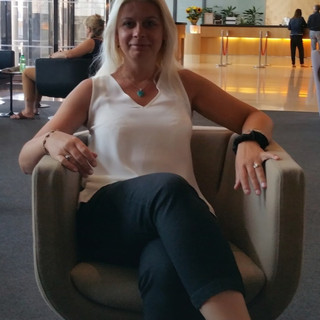
by Agnieszka Wolsoncroft
I want to tell you about something that happened a couple of weeks ago.
Anya and I made cupcakes. Not the first time, but this time it was special.
She wore her pink chef's hat – the one that's slightly too big and keeps sliding over her eyes – and took her job very seriously. Measuring flour. Cracking eggs. Filling each tin with exactly the right amount of batter because she'd decided that if even one cupcake was smaller than the others, the whole batch would be "unfair to the cupcakes."
Seven years old and already committed to justice for baked goods.
I watched her concentrate, tongue between her teeth, and thought: Fourteen years ago, I couldn't have imagined this. Not just the daughter I'd dreamed of since I was twelve. But this version of me. Present. Clear-eyed. Here for every single moment.
February 23, 2012. The day I chose freedom over chains.
But this story doesn't start with cupcakes or recovery meetings or the person I've become.
It starts with a question.
#
July 2011. London flat. Head in my hands. Utterly alone despite being surrounded by millions of people.
I'd achieved my childhood dream – seeing the world, crossing oceans when working on cruise ships. I'd promised myself at six years old, standing on a Polish beach watching the Baltic stretch endlessly, that I would see the whole world.
And I had.
But now I was trapped in a huge city that wasn't anywhere near the sea. After three years of waking up to ocean views, of crossing the Atlantic and Pacific and Indian Oceans, I was landlocked in London. Trapped in a relationship with alcohol that had become a prison I couldn't escape. Trapped in endometriosis pain that doctors continually dismissed. Trapped in smoke – two packs a day.
I sat in that flat one morning and a simple question emerged from somewhere deep:
What do I want?
I wanted to be near the ocean again. I wanted to stop feeling so desperately alone. I wanted to stop waking up sick and scared and trapped.
I wanted to be free.
But wanting and choosing are different things entirely.
#
Seven months later, I chose.
I walked into that meeting in Ealing. Saturday morning, 10 AM. "Morning tea with Bill W."
My hands were shaking. I was terrified. I didn't know if I belonged there, if I was "bad enough," if I could actually do this impossible thing called sobriety.
Then I saw a sign on the wall.
Three words that would change everything:
"Misery is optional."
I smiled because I liked it. Not "Think positive." Not "Just be grateful." Not another empty platitude.
Optional. A choice. Something I could actively select or reject.
Anna* – who would become a dear friend – rang the bell to start. People settled into chairs. Coffee was poured.
And I began the 12-step program that would teach me something I'd never understood before.
#
You have to be grateful first to be happy.
Not the other way around.
That was my biggest AHA moment when I finally got it. And I was amazed.
Most people wait to be happy with something before they're grateful for it. They think: when I get the promotion, when I find the relationship, when I buy the house, when the difficult thing resolves – then I'll be grateful.
It doesn't work that way.
Grateful first. Happy follows.
But here's what I started noticing when talking to people, watching people struggle with this exact thing: most people don't know why they're unhappy.
They have jobs. They have homes. They have health. They have people who love them. But they can't see any of it because the one thing that isn't going their way – the difficult boss, the car they can't afford, the vacation they haven't taken – becomes the whole story. What’s missing becomes the focus of their life.
"I really have nothing to be grateful for," they'd say.
And I'd think – but never say this – Come with me to the pediatric oncology wing. Come with me when I deliver 'Write a Letter, Send a Smile' letters to children fighting cancer. Come to the aged care homes where people sit alone for weeks without a single visitor. Then tell me you have nothing to be grateful for.
I wanted to tell them: There would be a queue of people wanting all the things you currently have.
Your health. Your family. Your ordinary Tuesday morning where the worst thing is traffic or a rude email.
But you can't tell people that. They have to discover it themselves.
Just like I had to.
#
Sometimes we hear "just be grateful" and if we can't feel it, when we think we have nothing to be grateful for, we decide gratitude doesn't work.
But gratitude works.
The trick is understanding that you can't skip straight to the feeling.
Looking back now, I can see a pattern I didn't recognise at the time. There were days I showed up to meetings feeling absolutely nothing. Just went through the motions – made the coffee, wrote the page, showed up. On other days, I'd catch myself really seeing things – Anna's smile when I walked in, the way sunlight hit the table, my hands steady enough to hold a cup without shaking. And then, sometimes – not every day, but sometimes – this warm feeling would flood through me. Gratitude, I guess. But it only ever came after the other two.
I couldn't force the feeling. But I could show up. I could pay attention. And eventually, the feeling would find me
#
And the strangest thing started happening in those rooms. The more people showed up for each other, the more everyone had to give. I don't have to fully understand it, but I know it's true.
#
A couple of weeks ago, on a Saturday morning, we went to the markets.
David was looking for tomatoes. Anya wanted to see if the flower stall had any new blooms. I was just wandering, grateful for the ordinary weekend morning feeling of it all.
Then I saw them.
Deep purple plums. The exact ones Babcia used for her famous cake.
I stopped. Picked one up. Held it.
March in Perth is plum season. And suddenly I was six years old in Poland, standing in Babcia's kitchen, watching her pour the cake mix and arrange purple plums in perfect overlapping circles.
She always saved me the corner piece. The best piece, where the pastry goes golden and crisp and the plum filling pools just right. She'd slide it onto my plate with a wink.
Standing in that Perth market holding a plum, I thought about dreams coming true.
At six years old, I stood on a Polish beach and dreamed of seeing the whole world. It happened.
At twelve, I read Anne of Green Gables and dreamed of adopting a daughter. Even dreamed of calling her Ania – the Polish spelling of Anne. Too specific, I thought. Too much to ask for. But it happened. Her name is Anya.
And now? Now I'm writing. Telling these stories. And for that, I needed all of it—the cruise ships and the London flat, the recovery meetings and the 12-step program, the ocean and the distance from it, the breaking and the healing.
All things are possible to those who believe.
I believed at six that I'd see the world.
I believed at twelve that I'd have a daughter.
And I believe now that these stories – the hard ones and the joyful ones and the ones where both exist at once – are meant to be shared.
#
"Are you crying, Mummy?" Anya asked, tugging my sleeve.
"Happy tears, sweetheart. Look – these plums. We're going to make something special with them."
#
Tonight, after we got home, I looked up Babcia's recipe. The one I know by heart but still need to see written in her handwriting, kept in the cookbook she gave me when I left Poland.
Tomorrow – Sunday – Anya and I will bake it together.
We'll prepare the cake mix. Arrange the plums. Fill the house with that particular sweetness that can transport you across forty years and half a world.
And while we wait for it to bake, while the kitchen fills with that smell, I'll tell her about dreams coming true. About the woman who taught me to be like the Sun – capable of shining alone. About choosing freedom. About understanding that you have to be grateful first to be happy, not the other way around.
About the three things that changed my life:
Showing up, even when I didn't feel like it.
Paying attention, even when everything hurt.
Trusting that the feeling would follow.
And then we'll take the cake out of the oven. We'll let it cool just enough. And I'll cut her the corner piece – the best piece, where the pastry goes golden and the filling pools just right.
And maybe she'll understand, the way I finally do, that gratitude isn't something you wait to feel.
It's something you do your way into. It's something you notice your way into.
And only then – when action and awareness have created the conditions – does the feeling arrive. Not because you forced it. But because you made space for it.
#
Fourteen years of choosing freedom. Not perfect. Not always easy. But real. So incredibly real.
The cupcakes Anya and I made are long gone now – devoured at our celebration, perfect frosting and all. But the plums from the market? They're ready. Waiting to become Babcia's cake.
Waiting to teach my daughter what Babcia taught me.
That all things are possible to those who believe.
That dreams do come true – sometimes exactly as you imagined them, sometimes better.
That we have to be grateful first. And happiness? It follows.
#
Next time, we're baking that cake. You and me. Well, Anya and me, but you're invited too, if you want to join. Close your eyes and come with us into the kitchen. I'll show you exactly how flour and plums and the simple practice of showing up together can become something sacred.
Come back in two weeks. I'll be here. With plum cake and the truth about how all three parts of the #TAG method work together – the doing, the noticing, and finally, the feeling. Thanksgiving, Appreciation and Gratitude.
With love and gratitude,
Agnieszka
#
If you're struggling with the choice I made fourteen years ago - the choice between freedom and chains - you don't have to make it alone. Reaching out for help shows courage, not weakness. There are rooms full of people waiting to welcome you, just like Anna welcomed me that Saturday morning.
If gratitude feels impossible right now, I hope you'll try what I tried. One small action. One thing to notice. And then... maybe the feeling will find you the way it found me. Quietly. When you least expect it. In a recovery room in Ealing, or a market in Perth, or wherever your version of freedom is waiting.
*Anna – name changed for anonymity


Comments