
It's Never Too Late To Have A Happy Childhood
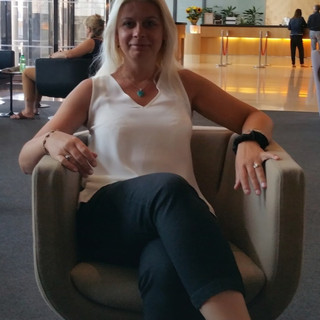
by Agnieszka Wolsoncroft

Last Sunday on our walk, Anya spotted a dandelion at the edge of the path.
She stopped mid-sentence – she'd been telling me something very important about a cartoon, the details of which I was doing my best to follow – and crouched down to examine it. A perfect one. Fully gone to seed, white and round and waiting.
She picked it very carefully, the way you pick something that matters.
Then she looked up at me.
"Close your eyes, Mummy."
I closed my eyes.
I heard one long breath, and then the soft sound of her blowing.
"Okay. Now you."
She placed a second dandelion – she'd been holding it behind her back the whole time, I hadn't noticed - into my hand.
"Make a wish. But don't say it out loud. That's the rule."
I stood on the path in the winter sunshine, holding a dandelion, and I made my wish. I won't tell you what it was. Those are the rules.
But I'll tell you this: I knew exactly what to wish for. Immediately. Without thinking.
Which told me something.
*
I used to run through the meadows looking for dandelions.
Poland, summer, somewhere between six and ten years old depending on the memory. The meadows near my grandparents' house were full of them – great clouds of white scattered through the long grass, each one a small, perfect wish waiting to happen.
There was something magical about those mornings. The dew still on the grass, the day not yet decided, anything possible.
I wished for things I could see: the red squirrel I'd spotted once near Dziadek's forest path and desperately wanted to see again. A particularly fragrant batch of wild strawberries on the morning walk to the lake. A whole afternoon with no rain. Or a perfectly shaped pinecone to bring back with me from holidays.
And things I couldn't quite see yet: to travel the world. To read every book worth reading. To have a library of my own one day – floor to ceiling, with a ladder on a rail, the kind you could disappear into for entire afternoons. To be a writer. To have a house with a beautiful garden and flowers and trees.
I didn't know how any of it would happen. I just knew it would.
That's what childhood gave me. Not certainty about the path – I had no idea about the path – but certainty about the destination. A deep, untroubled knowing that what I could imagine, I could one day have.
Albert Einstein said: "Imagination is more important than knowledge – for knowledge is finite."
I have lived by that sentence without always knowing I was living by it.
*
Somewhere between childhood and adulthood, most of us stop.
Not all at once. Gradually. The way light fades in autumn – you don't notice until suddenly it's dark at five o'clock and you can't remember the last long evening.
We stop blowing dandelions and start making plans. We stop dreaming and start being realistic. We swap imagination for information, wonder for worry, the enormous sky of possibility for the manageable ceiling of what seems achievable.
And we call this growing up.
Gabriel García Márquez understood this. He wrote: "It is not that people stop pursuing dreams because they grow old, they grow old because they stop pursuing dreams."
I think about that often. Age isn't what closes us down. Stopping is what closes us down. And stopping is always a choice – which means starting again is always a choice too.
*
Because here's what I've noticed: the people I admire most never quite stopped.
They kept one corner of themselves that still believed in the dandelion. Still made wishes without needing to announce them. Still held a picture in their minds of something they couldn't fully explain and trusted, quietly and without apology, that it was making its way toward them.
Dreams don't die on their own. We stop feeding them. We stop taking the small daily actions that keep them alive – the writing, the practicing, the showing up, the refusing to be talked out of what we know we want.
A dream without action is just a wish. But a dream walked toward, one small step at a time, with patience and faith and the occasional dandelion – that becomes a life.
I know this because I've lived it.
The world I wanted to see? I saw it - on cruise ships, in cities I couldn't have found on a map at age ten, eventually landing in Perth, Australia, as far from that Polish meadow as the earth allows.
The writing? You're reading it.
The beautiful garden with flowers and trees? I have it. The dream now is simply a bit more land, more trees, a pond or a lake, room to breathe and grow. The dream expands as you walk toward it. That's how it works.
The library? Floor to ceiling, a ladder on a rail, and growing. Every book I buy is a brick. And now Anya has her own collection beginning – shelf by shelf, story by story. We're building it together.
*
Anya tells me her wishes sometimes. Not the secret ones – those are for the dandelion – but the ones she's happy to say out loud. A trip back to Bali. A blue guitar.
And one more, which she told me very seriously and which I'm not allowed to repeat. Yet.
I love that yet. That small, confident word that belongs entirely to someone who hasn't learned to stop believing.
She runs ahead on walks to find dandelions and brings them back to me, careful not to breathe on them too early. She makes sure I close my eyes properly. She takes the whole ritual very seriously because she understands, instinctively, that wishing is serious work.
She's teaching me things I knew once and had to find my way back to.
*
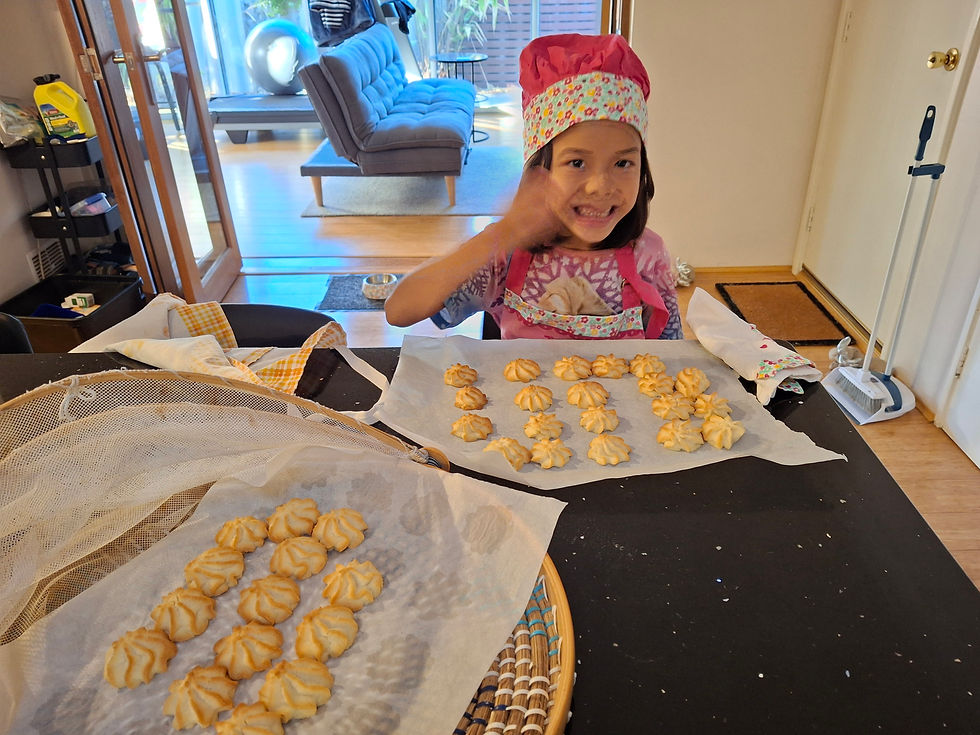
This afternoon we baked shortbread cookies. My recipe, her hands, flour on the bench and on her nose, and that particular kind of focused seriousness she brings to anything involving butter and sugar. She loves baking. It's one of her wishes - baking cookies with Mummy – and today it came true, the way it comes true most Sundays when we're home and the oven is warm and there's no particular reason to rush.
You see, that's the thing about wishes. Some of them are enormous – the trip to Bali, the blue guitar, the one she told me quietly and I'm not allowed to repeat. Yet.
And some of them are a Sunday morning, flour on your nose, the smell of shortbread filling the house. Both kinds are magical. Both kinds matter.
*
I think this is what it means to have a happy childhood – not that everything was easy, not that nothing was hard, but that somewhere inside you there lived a self who could still imagine freely. Who hadn't learned yet to disqualify their own dreams before they'd even had a chance to form.
That self doesn't have an age limit. You can find her again. Or him. Or them.
You find them in the meadow, crouching over a dandelion, deciding what to wish for.
You find them in the library you're building one book at a time, or the garden you're always dreaming a little larger, or the song you haven't learned yet, or the place you've never been but somehow already know is waiting.
It is never too late to have a happy childhood. Because childhood isn't a time. It's a way of seeing.
And you can choose it again, any Sunday morning, any ordinary path, any moment you pick up a dandelion and decide – with full seriousness – what you want your life to be.
Close your eyes. Make your wish. Don't say it out loud. Those are the rules.
*
Thanksgiving. Appreciation. Gratitude.
Thanksgiving is the action of dreaming – the writing, the walking toward, the daily small steps that say: I believe this is coming. Appreciation is noticing that you already have more of your dream than you remember – the books on the shelf, the words on the page, the daughter bringing you dandelions, the shortbread cooling on the bench. And Gratitude is the feeling that rises when you realise: the dreaming child you were is still here. Still wishing. Still walking forward.
What you focus on expands. Dream on purpose.
With love and gratitude,
Agnieszka
*
If childhood feels like something that happened to you rather than something you were given - if your early years were complicated or hard or simply not what you needed them to be - you're not alone. A happy childhood isn't something that expires. It lives in the dandelion you blow on a Sunday walk, in the book you read for pure pleasure, in the wish you make and keep to yourself. In the dream you haven't given up on, even when the world suggested you should. It's never too late to claim it. The TAG Method begins here: show up for beauty even when it isn't yours yet (Thanksgiving), notice what's already generous and good around you (Appreciation), and let yourself feel, genuinely feel, the richness of a life still being imagined (Gratitude). The dreaming child in you isn't gone. They're just waiting to be taken seriously again.
*
Come back in two weeks. I'll be here with something that's been growing quietly in the background of these posts – about healing, about the things we carry forward and the things we finally set down. About what changes when you stop waiting for permission to live the life you imagined.
If this reflection met you where you are today, I invite you to continue the journey by signing up for our fortnightly newsletter CONTACT
Read more about gratitude and the TAG Method GRATITUDE & THE TAG METHOD
If you'd like to read my previous posts, click here


Comments